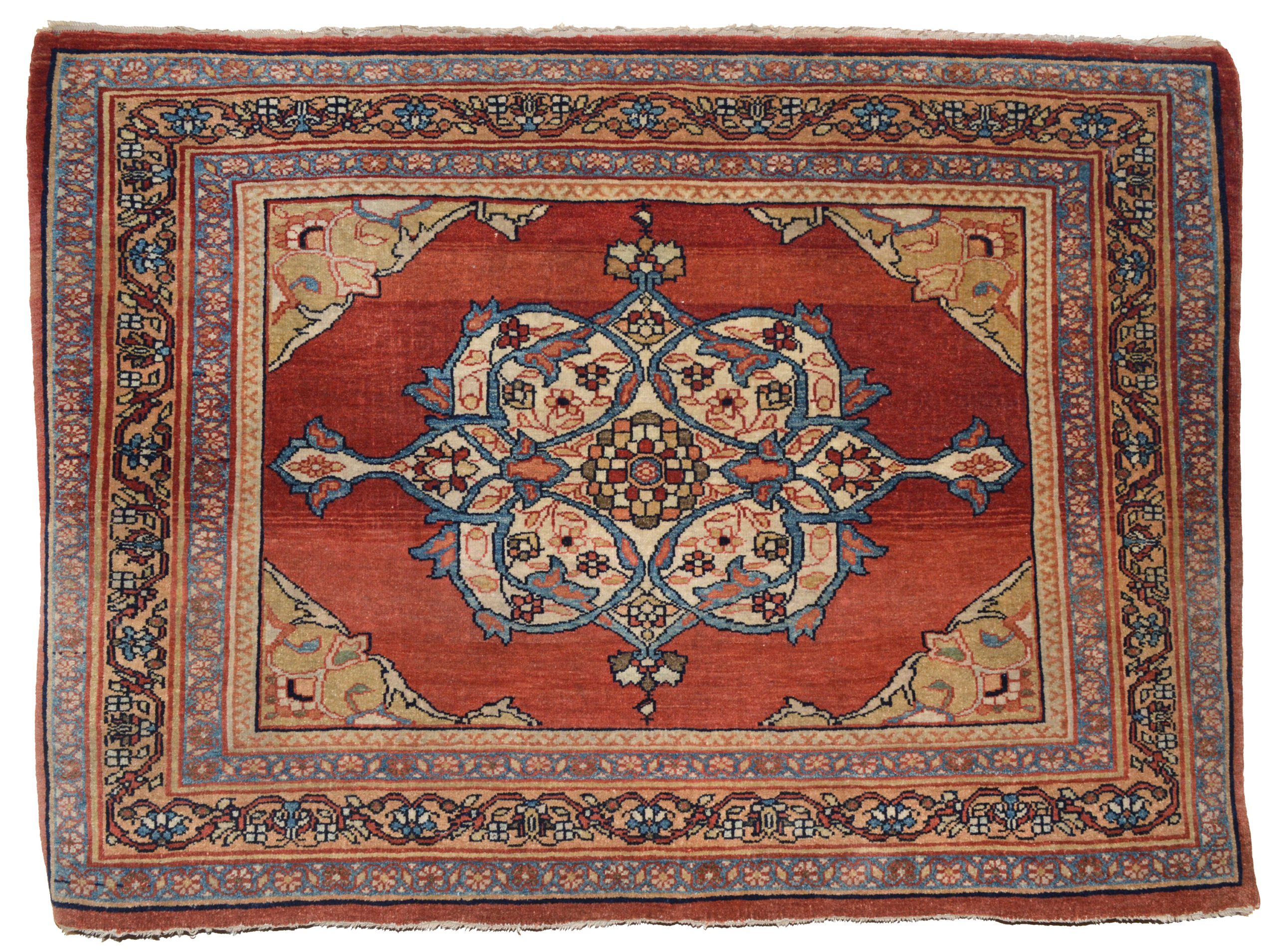



3.1 x 2.3 World Class Antique Tabriz Rug, Northwest Persia, Circa 1875
Tabriz is one of the largest cities in Persia and merchants there in the 19th century were at the forefront of the Persian rug revival period that largely began in the 1870s, to a certain degree inspired by the Vienna World Exposition or Fair in 1873. Since the Safavid Dynasty fell circa 1722, production of Persian rugs, which had from the early 16th century until the early 18th century benefitted from court patronage, dramatically declined. From the 1870s until the early 20th century, Persian rug production increased, with examples from the early part of that era often being the most beautiful.
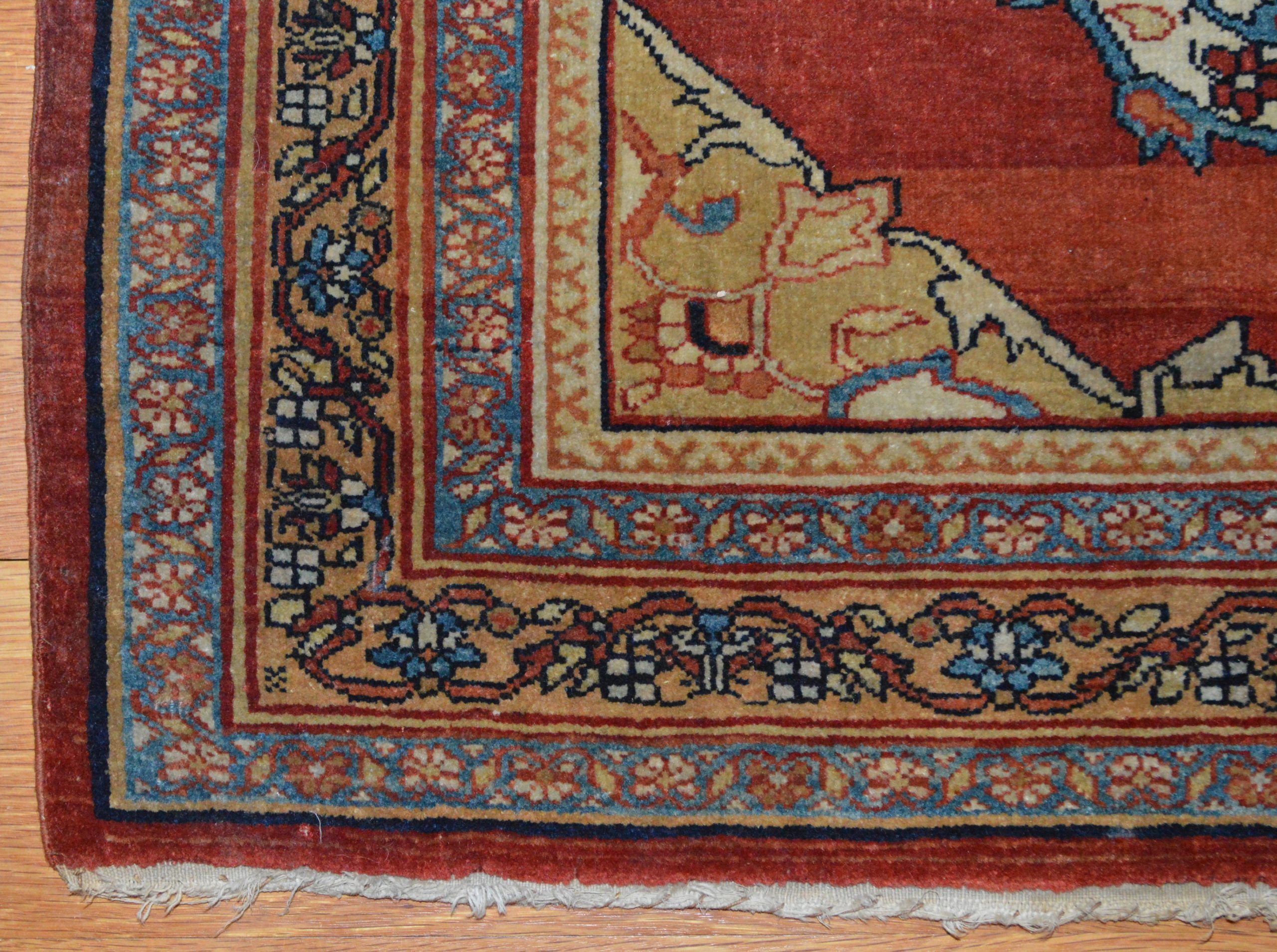
This small Tabriz rug, in a size often referred to as a “at” or “poshti” (around 2 feet by 3 feet) is perhaps the earliest and most beautiful example we have seen. The “abrashed” (variegated) brick color field is decorated by an elaborate ivory medallion with light blue vines and multi-color flowers. Yellowish green corner spandrels and an apricot color major border with light blue guard borders frame the field.
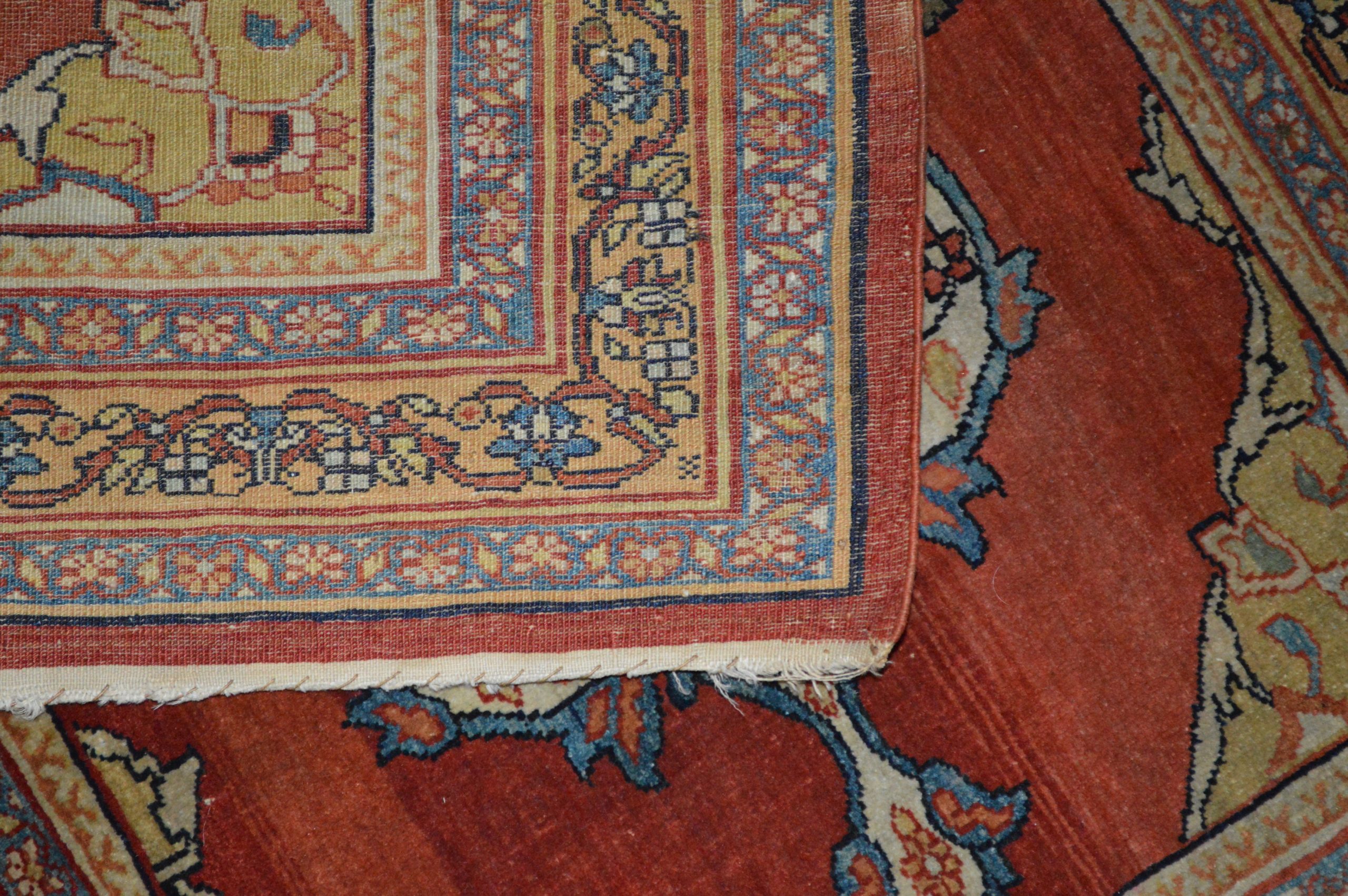
Very finely woven, this rug also has a pliable handle that differs from most Tabriz mats produced closer to the very end of the 19th century that are heavier and stiffer in construction. The articulation of the design also has the slightly rectilinear character of early Tabriz rugs, along with their Mohtasham Kashan and Fereghan Sarouk counterparts; all three types being essentially floral rather than geometric but with the earliest, and often best, examples generally having a superior sense of space in the design and somewhat rectilinear articulation of what are basically curvilinear designs.
This rug is also distinctive in being wider than it is long.